

Healthcare organizations today, are navigating increasing financial pressures, workforce shortages, rising denial rates, evolving payer requirements, and stricter compliance expectations. To address these challenges, many providers are turning to outsourcing revenue cycle management as a strategic solution to improve operational efficiency, reduce administrative burden, and strengthen financial performance.
The trend is growing rapidly. According recent research, the global healthcare payer BPO market is projected to reach $50.44 billion by 2034 along with an anticipated CAGR of 6.59% during the 2026-2034 forecast period. This expansion will be driven by the growing need for operational efficiency, specialized expertise, and cost optimization across healthcare organizations.
While outsourcing can offer significant operational and financial benefits, success depends on choosing the right outsourcing partner. Pena4 helps healthcare and health information organizations navigate the complexities of outsourcing RCM through experienced teams. These benefits are among the key reasons why more healthcare providers are turning to outsourcing as a strategic approach to improving revenue cycle performance.
Why Healthcare Organizations Are Choosing Outsourcing Revenue Cycle Management
Healthcare revenue cycle operations have become increasingly complex. From patient registration and insurance verification to medical coding, billing, denial management, and collections, every stage of the revenue cycle directly impacts reimbursement and cash flow.
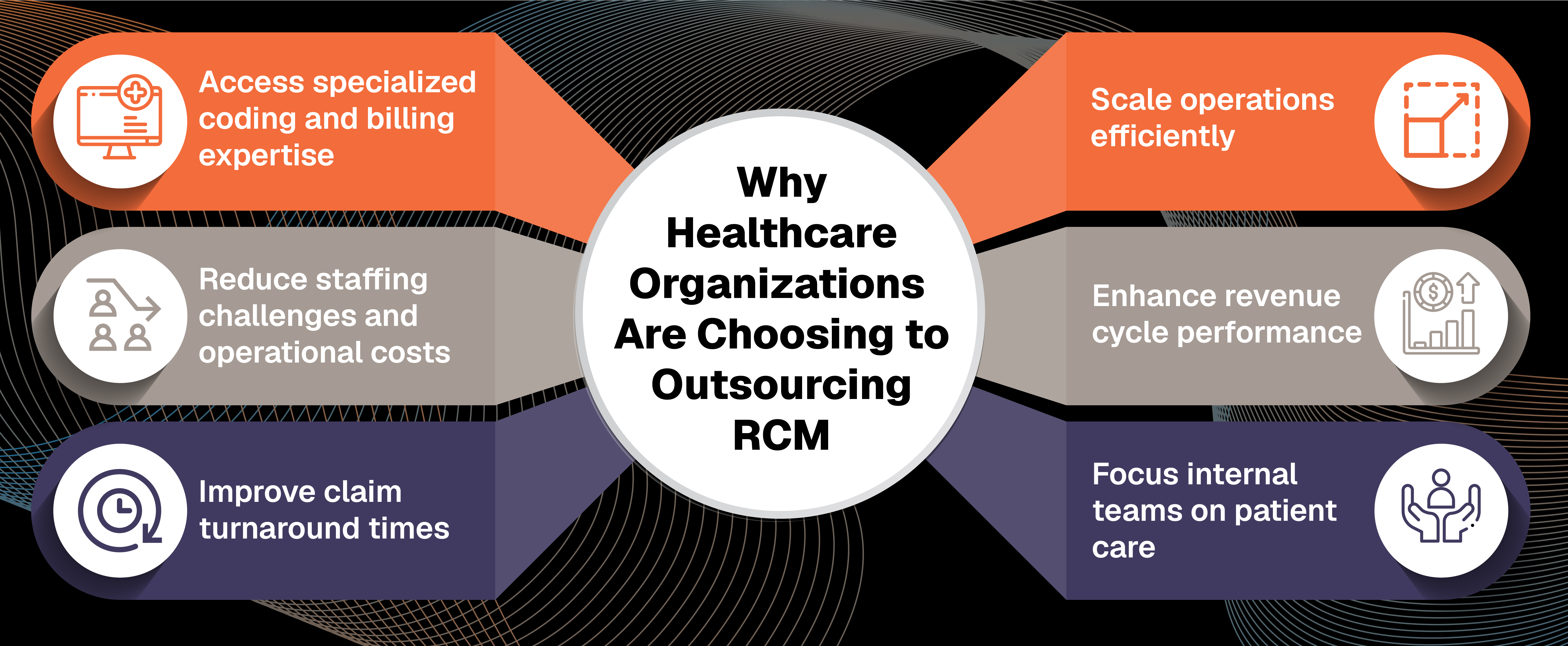
Healthcare providers are increasingly embracing healthcare revenue cycle outsourcing to:
- Access specialized coding and billing expertise
- Reduce staffing challenges and operational costs
- Improve claim turnaround times
- Scale operations efficiently
- Enhance revenue cycle performance
- Focus internal teams on patient care
When implemented correctly, outsourcing can become a powerful extension of an organization's financial operations rather than simply a cost-saving initiative.
However, while outsourcing offers significant advantages, achieving long-term success requires organizations to address the potential risks associated with any outsourcing partnership. Before making a strategic decision, it’s important to examine the realities behind outsourcing and the challenges that can impact performance if not managed properly.
The Reality Behind Outsourcing Decisions
Many healthcare leaders initially view outsourcing as a straightforward solution to operational challenges. In reality, outsourcing introduces a new layer of partnership management that requires careful oversight.
One of the most common concerns is loss of visibility. When critical revenue cycle functions move outside the organization, healthcare leaders may feel disconnected from daily operations if reporting structures and communication channels are not clearly established.
Another challenge is competing priorities. Many outsourcing vendors serve multiple clients simultaneously, which can sometimes result in inconsistent service delivery or delayed response times.
Staff turnover within outsourcing organizations can also impact continuity and quality. Without comprehensive training programs, quality assurance processes, and knowledge retention strategies, organizations may experience billing inaccuracies, coding errors, and delays in reimbursement.
These are among the most frequently cited RCM outsourcing challenges, highlighting why vendor selection should extend beyond cost considerations alone.
Key Operational Challenges Healthcare Leaders Must Evaluate
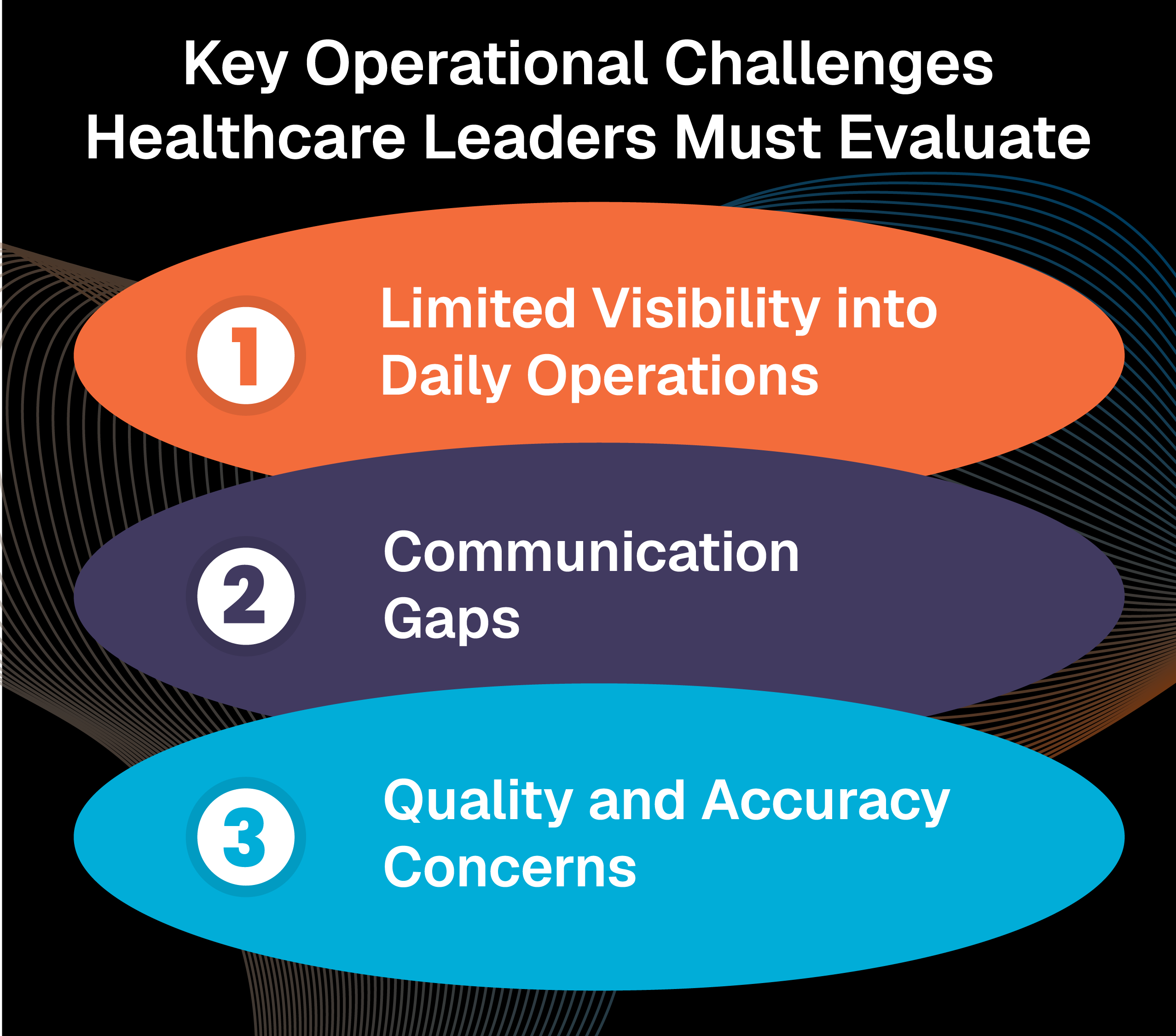
Limited Visibility into Daily Operations
When processes are handled externally, healthcare organizations may have less direct oversight over productivity, turnaround times, and performance metrics. This lack of visibility can make it difficult to identify bottlenecks before they impact reimbursement cycles.
At Pena4, clients receive ongoing performance reporting and operational transparency, ensuring they maintain visibility into key revenue cycle metrics without increasing administrative workload.
Communication Gaps
Communication breakdowns remain one of the most common outsourcing concerns. Without dedicated points of contact, clearly defined escalation paths, and consistent reporting structures; delays can occur in resolving billing issues, payer inquiries, and claim denials.
Successful outsourcing partnerships depend on efficient collaboration between providers and the outsourcing teams. Our team at Pena4 helps in bridging these communication gaps through transparent workflows, proactive stakeholder engagement, regular performance reviews, and responsive support teams. By establishing the clear lines of communication and accountability, we enable organization to maintain operation efficiency, addressing issues rapidly, and minimizing disruption to revenue cycle performance.
Quality and Accuracy Concerns
Medical coding and billing accuracy directly influence clean claim rates, denial rates, and reimbursement timelines. Research suggests that nearly 10% of healthcare claims are denied annually, creating significant administrative burdens and revenue delays for providers.
Errors in coding, documentation, or claims submission can lead to preventable denials, rework, and revenue leakage. This is why healthcare organizations should evaluate vendor quality assurance programs, coder certifications, audit processes, and training frameworks before outsourcing critical functions.
Professionals at Pena4 address these challenges through certified coding and billing expertise. With rigorous quality assurance measures, routine audits, and ongoing training programs, our team leverage denial trend analysis, payer-specific expertise, and multi-level quality checks to improve coding accuracy. This helps healthcare organizations strengthen revenue cycle performance while maintaining compliance and operational consistency.
Data Security and HIPAA Compliance Cannot Be an Afterthought
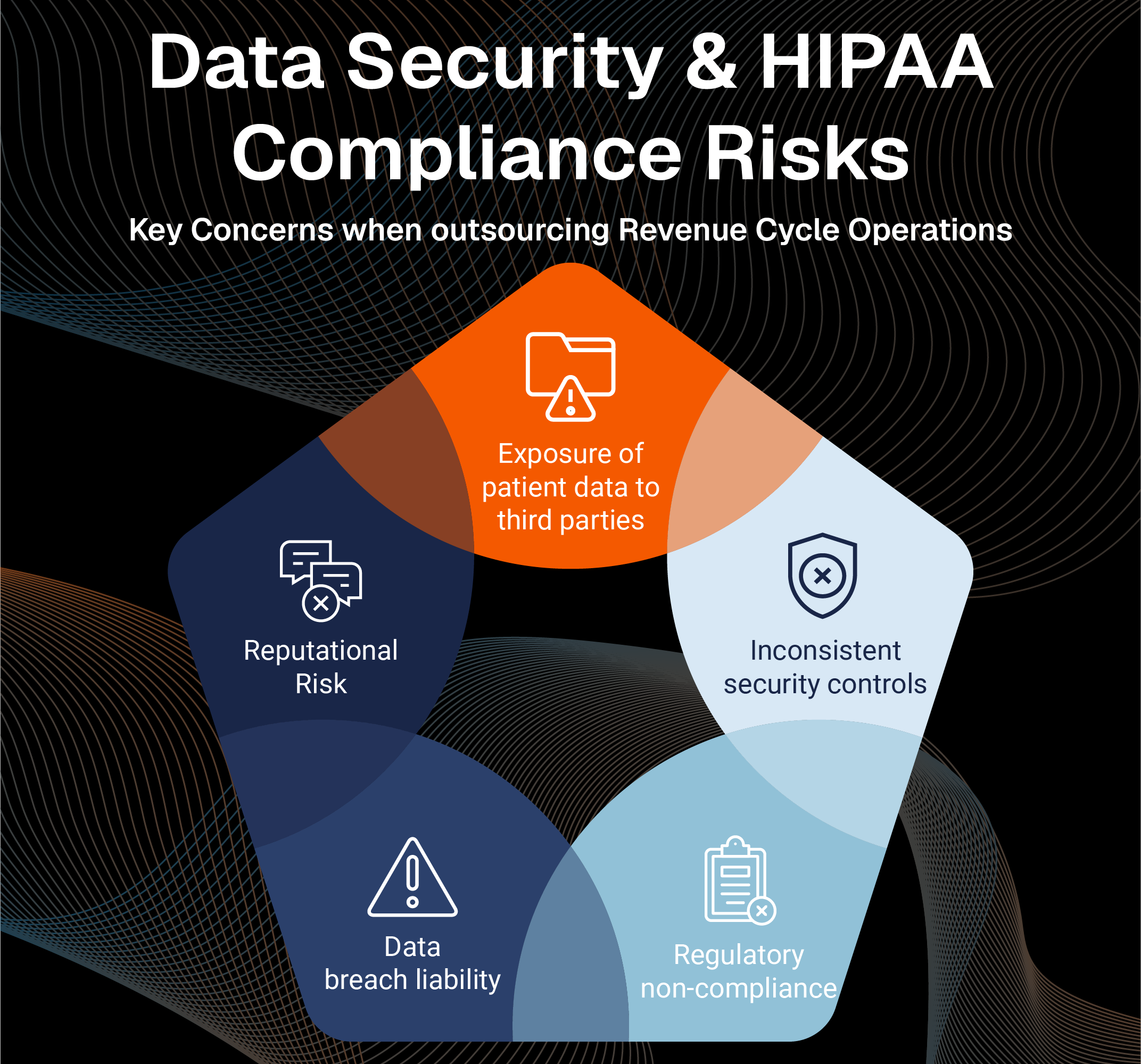
Healthcare organizations manage some of the most sensitive data in any industry. When considering outsourcing revenue cycle management, providers must ensure their outsourcing partner follows rigorous security protocols and compliance standards.
Potential concerns include:
- Exposure of patient data to third parties
- Inconsistent security controls
- Regulatory non-compliance
- Data breach liability
- Reputational risk
Recent updates proposed under HIPAA cybersecurity regulations places increased emphasis on vendor oversight, risk assessments, access controls, and incident response planning. Healthcare organizations evaluating HIPAA compliance outsourcing should ensure their partners maintain robust security frameworks, documented compliance procedures, workforce training programs, and Business Associate Agreements (BAAs).
At Pena4, compliance is embedded into every operational workflow. Our teams follow secure processes designed to support regulatory requirements while protecting patient information throughout the revenue cycle.
Offshore Medical Billing Services: Balancing Cost Savings with Quality
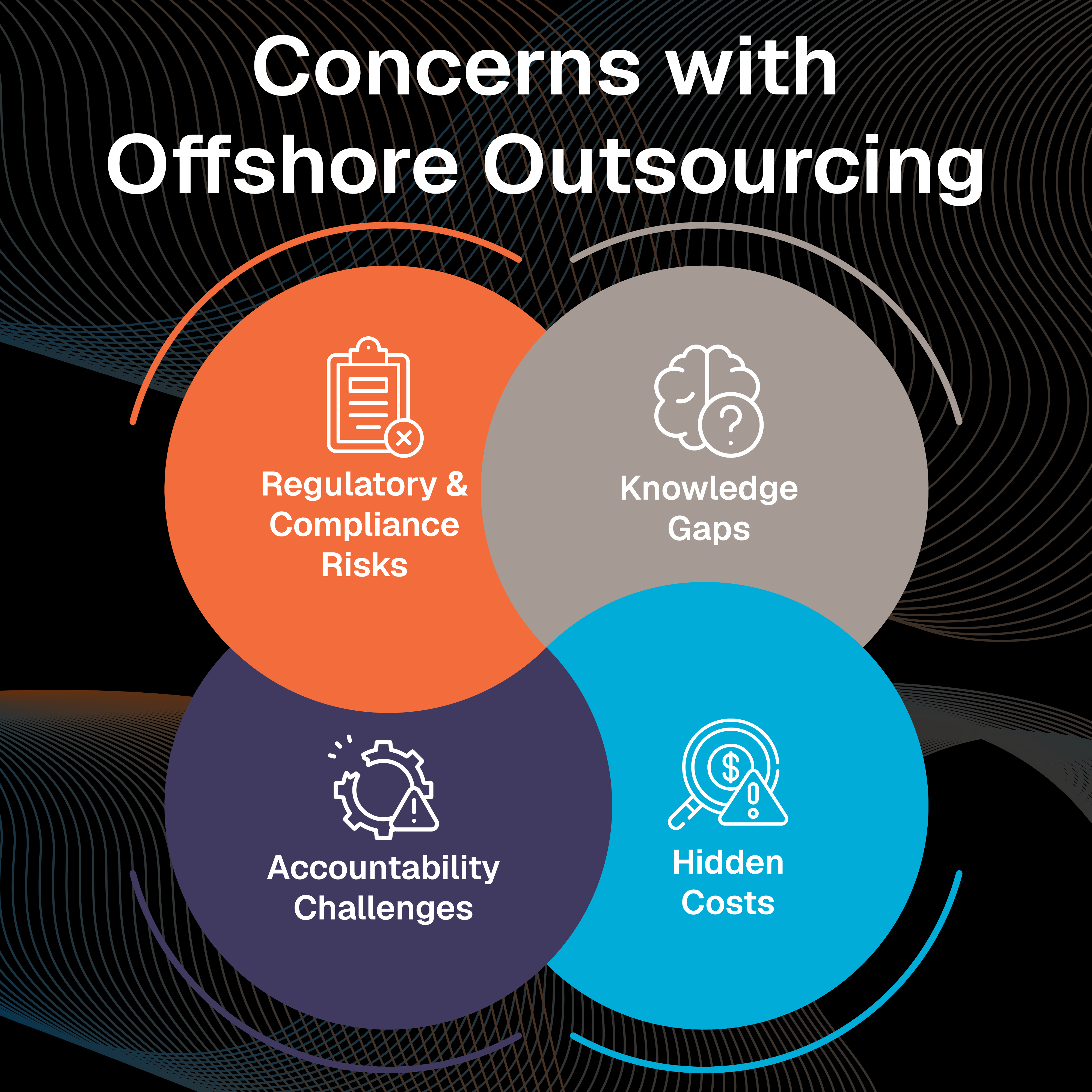
The discussion around offshore medical billing services often centers around cost reduction. While offshore outsourcing can provide significant financial advantages, organizations must evaluate providers based on quality, expertise, and compliance, not price alone.
Common concerns associated with offshore outsourcing include:
Regulatory and Compliance Risks
Healthcare regulations continue to evolve, and outsourcing partners must remain aligned with U.S. healthcare standards, payer requirements, and compliance expectations.
Knowledge Gaps
A lack of understanding of payer-specific guidelines, specialty coding requirements, or reimbursement policies can result in higher denial rates and revenue delays.
Accountability Challenges
Managing performance and accountability across geographies can become difficult without clearly defined governance structures.
Hidden Costs
Organizations often focus on immediate savings while overlooking costs associated with claim corrections, appeals, quality audits, and revenue recovery efforts.
These medical billing outsourcing risks can significantly impact financial performance when outsourcing relationships are poorly managed.
Our offshore delivery model at Pena4 is built specifically for U.S. healthcare organizations. Through continuous training, quality monitoring, certified professionals, and performance-driven processes, we help clients achieve the benefits of outsourcing while minimizing operational risk.
Medical Coding Risks Organizations Cannot Ignore
Medical coding remains one of the most critical components of the revenue cycle. Poor coding accuracy not only impacts reimbursement but can also create compliance concerns and increase audit risk.
Key medical outsourcing risks associated with coding include:
- Lack of Certified Expertise: Not all outsourcing providers employ certified coding professionals. Insufficient expertise can result in inaccurate code assignments and compliance vulnerabilities.
- Over-Reliance on Automation: Technology can improve efficiency, but coding decisions often require clinical judgment and specialty-specific knowledge that automation alone cannot provide.
- Ineffective Denial Management: Without structured denial analysis and root cause identification, organizations may experience recurring denials that negatively impact cash flow.
- Limited Audit Oversight: Regular audits are essential for identifying trends, improving accuracy, and ensuring compliance.
Our experts at Pena4 are committed towards mitigating coding-related risks with certified coding professionals, specialty-specific expertise, rigorous quality assurance process, and regular coding audits. Our teams combine technology with human expertise to ensure coding accuracy, identifying denial trends, and maintaining compliance. This helps with supporting higher clean claim rates.
By embedding quality and accountability throughout the coding lifecycle, we help providers reduce revenue leakage, improve reimbursement outcomes, and maintain coding integrity.
Why the Right Outsourcing Partner Makes the Difference
The risks associated with outsourcing are real. However, they are not inevitable. The difference often comes down to selecting a partner that prioritizes transparency, accountability, quality, and compliance.
Healthcare organizations should look for outsourcing partners that provide:
- End-to-end revenue cycle expertise
- Certified coding and billing professionals
- Dedicated account management
- Comprehensive quality assurance programs
- Transparent reporting and analytics
- Strong compliance frameworks
- Scalable operational support
We view every client engagement at Pena4, as a long-term partnership rather than a transactional service arrangement. Our teams work as an extension of our clients' operations, helping them improve revenue cycle efficiency while maintaining control and visibility.
Final Thoughts
As healthcare organization face the growing financial pressures, increasing regulatory complexities, and staffing challenges; revenue cycle outsourcing has evolved from an operation consideration into a strategic advantage. The question is no longer based on whether outsourcing can support financial performance, but how to build a partnership that delivers lasting value. Success in outsourcing starts with understanding the risks and opportunities. Organization approaching outsourcing with clear expectations, strong oversight, and the right partner, are often positioned to improve revenue integrity and focus on patient-centric priorities.
Pena4 believes that outsourcing should create greater visibility. Through transparent communication, measurable results, and deep revenue cycle expertise, we help healthcare organizations and business navigate complexities with confidence. We also ensure proper control over financial operations. The future of RCM is not about doing more with fewer resources. It is also about building smarter partnerships driving sustainable results.
Stay connected with Pena4 for more insights, strategies, and industry perspectives shaping the future of healthcare reimbursement.